Caring for a wooden cutting board
Quick answer
Wash wooden boards by hand with soap and water, dry immediately, then oil monthly with food-grade mineral oil or a mineral oil and beeswax blend. Never put a wooden board in a dishwasher or soak it.
This guide is researched from wood scientist findings on board materials and published manufacturer care instructions.
| Task | Frequency | Method | Time required | Critical timing |
|---|---|---|---|---|
| Hand wash with soap | After every use | Warm water, sponge, cloth, soap | 5 minutes | Within 30 minutes of use |
| Dry with cloth | After every use | Cloth or kitchen towel | 2 minutes | Immediately after washing |
| Oil with mineral oil | Monthly or more | Cloth application, 15 min soak | 20 minutes | Can be done anytime |
| Sanitize for raw meat | As needed | Dilute bleach wipe, air dry | 5 minutes active, overnight dry | Immediately after raw meat use |
| Inspect for damage | Quarterly | Visual check for cracks and warping | 1 minute | Any time |
| Retire and replace | Every 10 to 20 years | Replace with new board | N/A | When warped, cracked, or heavily scored |

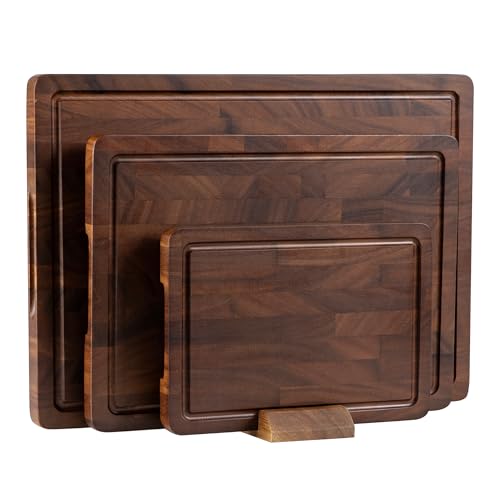
Walnut Wood Cutting Board for Kitchen, End Grain Chopping Boards
Why wooden boards need different care
Wood is a natural material that absorbs and releases water. A wooden cutting board that sits in water or goes through a hot dishwasher absorbs moisture, causing the wood to expand and warp. As the board dries, it shrinks unevenly, creating cracks and warping that eventually make it unstable and unsafe to use on a countertop. Heat from the dishwasher accelerates this process and can separate the joints if the board is laminated.
Wooden boards also absorb oils naturally present in foods, which can go rancid if left inside the wood. Mineral oil, which does not oxidize or go rancid, replenishes the wood and keeps it sealed against moisture. This is why hand washing and oiling are essential to keep a wooden board usable for years.
Hand washing wooden boards
Wash your wooden board immediately after use with hot water and dish soap. Use a sponge or cloth to clean both sides, paying attention to grooves where food particles hide. Soap helps remove fats and keeps the board fresh. Rinse thoroughly under hot running water until all soap residue is gone. Do not soak the board, even briefly. The goal is to clean quickly and move to drying.
For stubborn food residue, sprinkle the board with coarse salt and rub it with a cut lemon or lime. The acid loosens stuck food and the salt acts as an abrasive. This method is gentler than scrubbing and smells fresh. Rinse well afterward.
Drying and storage
After washing, dry the board immediately with a cloth. Do not let it air dry or stand wet on the counter, as the wood will absorb water and swell. Stand the board upright against a backsplash or wall so air can circulate on both sides. Store the board upright or flat, but never in a humid place such as under a sink or in a cabinet above a dishwasher.
Humidity is your wooden board worst enemy. If your kitchen is very humid or if your board will not be used for weeks, consider storing it in a low-humidity area such as a pantry or kitchen drawer. Some people store boards flat on a shelf with a space between the board and the next item, allowing air to flow. Avoid wrapping a board in plastic, which traps moisture.
Oiling to protect and seal
Oil your wooden board monthly, or more frequently if you use it daily. Use food-grade mineral oil, which does not go rancid and is completely safe to ingest in tiny amounts. Mineral oil blocks water from entering the wood and keeps the surface hydrated. Apply a small amount of oil to a cloth and rub it onto the board in the direction of the wood grain. Cover both sides and all edges. Let the oil sit for 10 to 15 minutes, then wipe away excess with a clean cloth. The board should look slightly matte, not shiny.
Beeswax blended with mineral oil provides even better protection and creates a harder surface that resists staining. Mix equal parts mineral oil and food-grade beeswax, gently melt them together, then let cool until it is a soft paste. Apply a small amount to the board and rub it in, then buff away excess after 15 minutes. This blend lasts longer than oil alone and provides a pleasant natural smell. Never use cooking oils such as olive or coconut oil to condition a board, as these oxidize and go rancid inside the wood.
When to retire a wooden board
A well-maintained wooden board lasts 10 to 20 years. Retire a board if the surface develops deep knife scoring or cracks. Deep grooves trap bacteria and food particles that soap and water cannot reach. A cracked board is structurally weak and may splinter. If the wood is warped so badly that the board rocks on the counter, it is also time to replace it.
Minor surface scratches and discoloration are normal and harmless. These do not affect food safety or the board longevity. Do not sand a board to restore it unless you are experienced, as sanding changes the grain and can remove important surface structure. If a wooden board has cosmetic damage but is still structurally sound, keep using it; the character adds to its appeal.
Wooden boards versus plastic for raw meat
Plastic cutting boards are preferred for raw meat because they can go in the dishwasher and are easier to sanitize thoroughly. Wooden boards are porous and can harbor bacteria inside the surface if not cleaned immediately and dried completely. If you frequently cut raw meat, use a dedicated plastic board for that task and a wooden board for vegetables and cooked foods. Many food safety guidelines recommend this separation.
If you prefer to use a wooden board for raw meat, wash it immediately with hot water and soap, dry it completely, then sanitize it by wiping the surface with a cloth dampened in a dilute bleach solution (one tablespoon per gallon of water). Allow to air dry completely. This is more work than washing a plastic board in the dishwasher, so consider keeping both types of boards.
Dealing with stains and odors
Wooden boards naturally absorb some food color and can develop stains from beets, turmeric, or red wine. These stains are harmless and do not affect food safety. Mild stains fade with age and oiling. If a stain bothers you, try rubbing the board with a cut lemon or lime and allowing it to sit for an hour, then washing and oiling.
Odors such as garlic or onion can linger in wooden boards. Rub the board with a cloth dampened in vinegar and let it sit for 10 to 15 minutes, then wash and dry. The vinegar neutralizes odors. Baking soda also works; sprinkle it on the damp board, let it sit for an hour, then wash away. These remedies remove odors without damaging the wood.
Gear for this job
- Viva Doria
Viva Doria Mineral Oil, USP Grade, Food Grade, 8 Fl Oz (236 ml)
$6.39 Check pricePrices change often - Kate Naturals
Kate Naturals Mineral Oil for Wood Cutting Board, Food Grade, Odorless, 8oz
$8.99 Check pricePrices change often - thetchry
THETCHRY Walnut Wood Cutting Board Set, End Grain Cutting Board for Kitchen
$79.99 Check pricePrices change often - Sonder Los Angeles
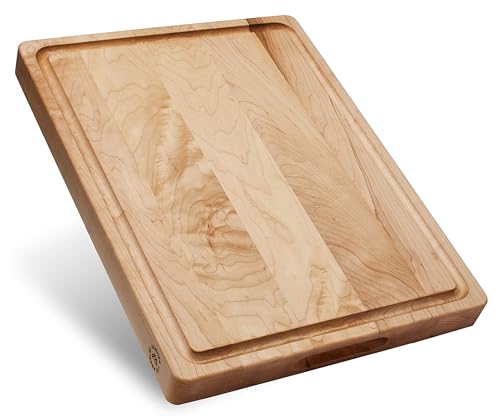
Sonder Los Angeles Winsome Hard Maple Wood Cutting Board, 17x13x1.5 in
$99.99 Check pricePrices change often - Sonder Los Angeles
Sonder Los Angeles Alfred Cutting Board, End Grain Walnut, 17x13x1.5 in
$179.99 Check pricePrices change often



Safety
Common questions
Can I use olive oil to condition a wooden cutting board
No. Olive oil and other cooking oils oxidize and go rancid inside the wood. Use only food-grade mineral oil or a mineral oil and beeswax blend. Mineral oil is inexpensive and lasts much longer.
Is it okay to put a wooden board in the dishwasher once
Even one dishwasher cycle exposes the board to high heat and prolonged moisture, which can cause warping. If done once, the board may be fine, but repeated dishwashing will damage it. Hand wash only to ensure your board lasts years.
Why do wooden boards get dark stains
Foods such as beets, turmeric, cherries, and red wine contain pigments that soak into the wood surface. These stains are harmless and do not affect food safety. They fade over time as you oil and use the board. Lemon juice and baking soda can lighten stains if you find them bothersome.
How much mineral oil should I apply
Use a small amount, about one teaspoon for a large board. Apply with a cloth and rub it in, then wipe away excess after 15 minutes. The board should look slightly matte, not shiny or wet. Too much oil sits on the surface and can turn sticky or attract dust.
Can I sand a wooden board to restore it
Light surface sanding is possible, but it is easy to damage the grain or unevenly remove material. Unless you are experienced, it is better to embrace the patina and keep the original surface. If a board is damaged, replacement is safer and easier than restoration.