Cutting board size for a 8 inch knife
Quick answer
A 8 inch knife wants a board of at least 12 inches on its long side, and an 18 by 12 inch board is the size most home cooks settle on. A board should be at least four inches longer than the blade you use on it, so an eight inch chef knife wants a board of twelve inches or more. Eighteen by twelve is the size most home cooks settle on.
The four inch allowance is a widely used kitchen convention rather than a published standard.
| Blade length | Minimum board length | Comfortable board |
|---|---|---|
| 5 in | 9 in | 15 in |
| 6 in | 10 in | 15 in |
| 7 in | 11 in | 15 in |
| 8 in | 12 in | 15 in |
| 9 in | 13 in | 15 in |
| 10 in | 14 in | 16 in |
| 12 in | 16 in | 18 in |

John Boos Chop-N-Slice Series Rectangular Maple Cutting Board
Why a 8 inch knife needs a 12 inch board
A board should be at least four inches longer than the blade you use on it, so an eight inch chef knife wants a board of twelve inches or more. Eighteen by twelve is the size most home cooks settle on. The reason is that the blade needs somewhere to go at the end of a cut and the cut food needs somewhere to be pushed. A board only as long as the blade means every slice has to be cleared before the next one, which slows everything down and encourages the kind of rushed, crowded knife work that causes accidents.
Cramped board space is the most common cause of slow and unsafe cutting in a home kitchen, and it is far cheaper to fix than any knife upgrade. More board area improves daily cutting more than a more expensive blade does.
What the board is made of matters to the edge
End grain wood is the kindest surface to a knife: the edge passes between the wood fibres rather than across them and the fibres close again behind it. Edge grain gives most of that benefit for less money and weight. Plastic is harder on the edge and can go in a dishwasher, which is why it is the right board for raw meat.
Never cut on glass, stone, marble or ceramic. They dull an edge within a few strokes and can chip a hard Japanese blade outright, which is a repair that needs a stone and real skill.
Thickness, weight and staying put
A board that slides is a board that cuts you. A damp cloth or a silicone mat underneath fixes it instantly, and a heavier board is less inclined to move in the first place. Thicker end grain boards, at around an inch and a quarter or more, also resist the warping that thinner boards develop as they take up and lose moisture.
Use food-grade mineral oil or a mineral oil and beeswax blend. Cooking oils go rancid in the wood and make the board smell.
Cutting boards
- thetchry
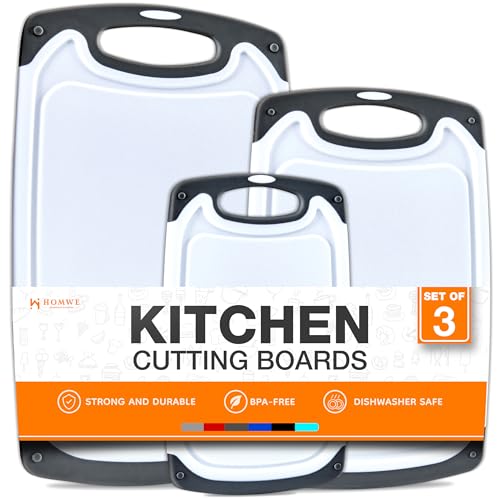
THETCHRY Plastic Cutting Board Set of 3-Cutting Boards for Kitchen BPA Free
$9.99 Check pricePrices change often - OXO
OXO Good Grips 2-Piece Plastic Cutting Board Set - Double-Sided
2 pieces$27.95 Check pricePrices change often - thetchry
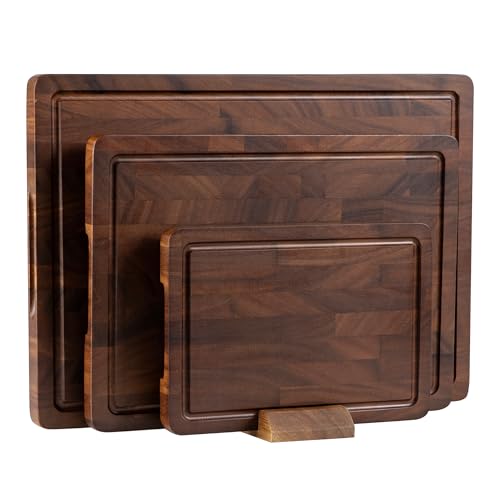
THETCHRY Walnut Wood Cutting Board Set, End Grain Cutting Board for Kitchen
$79.99 Check pricePrices change often - Sonder Los Angeles
Sonder Los Angeles Alfred Cutting Board, End Grain Walnut, 17x13x1.5 in
$179.99 Check pricePrices change often




Common questions
What size cutting board do I need for a 8 inch knife?
At least 12 inches on the long side, and ideally more. The convention is that a board should be at least four inches longer than the blade used on it, so there is somewhere for the knife to finish and somewhere to push cut food aside. An 18 by 12 inch board comfortably handles anything up to a 12 inch blade.
Is a bigger board always better?
Up to the limits of your counter and your sink, essentially yes. The practical constraints are whether it fits the space you cut on and whether you can wash it. A board too large for the sink tends not to get cleaned properly, which is a real argument for a large main board plus a small second one for quick jobs.
Wood or plastic?
Both, for different jobs. Wood is kinder to the edge and is the better main board. Plastic can be sanitised in a dishwasher and wood cannot, which makes plastic the right choice for raw meat and fish. Owning one of each costs little and removes the cross-contamination question entirely.
Why not a glass or marble board?
Because they destroy knife edges. Glass, stone, marble and ceramic are all far harder than knife steel, so every cut abrades the edge, and a few minutes of work on one undoes a full sharpening. On a hard Japanese blade at 60 HRC or above they can chip the edge outright rather than merely dulling it.
How do I stop the board sliding?
Put a damp cloth or paper towel underneath, or a thin silicone mat. It takes two seconds and it is the single most effective knife safety measure in a home kitchen. A board that moves mid-cut is how hands get cut, and a heavier board helps but does not remove the need.