Is a plain stainless steel dutch oven induction compatible?
Quick answer
It depends on the specific pan. A plain stainless steel dutch oven works on induction only if the maker bonded a magnetic base to it. It depends on the grade. Ferritic stainless such as 430 is magnetic and works; austenitic 18/10, which is grade 304, is not magnetic and does not. Settle it in two seconds: a fridge magnet must grip the base firmly.
Induction couples to ferromagnetic metal, so compatibility is a property of the base material rather than of the brand.
| Material | Works on induction | Why |
|---|---|---|
| Tri-ply stainless clad | Yes | The exterior layer is magnetic stainless, so a magnet sticks and an induction hob couples to it. |
| Five-ply stainless clad | Yes | The exterior layer is magnetic stainless, so a magnet sticks and an induction hob couples to it. |
| Disc-base stainless | Yes | The bonded disc normally contains a magnetic steel layer specifically so the pan works on induction. Check with a magnet |
| Bare cast iron | Yes | Iron is ferromagnetic, so cast iron is the most reliably induction-compatible cookware there is. |
| Carbon steel | Yes | Steel is ferromagnetic, so carbon steel works on every hob type. |
| Enamelled cast iron | Yes | The enamel is only a surface glaze. The body underneath is iron, so it works on induction. |
| PTFE nonstick | Depends on the base | It depends entirely on the base. An aluminium body alone will not work; many nonstick pans have a magnetic steel plate b |
| Ceramic nonstick | Depends on the base | Depends on the base, exactly as with PTFE nonstick. Use a magnet. |
| Bare or anodised aluminium | No | Aluminium is not ferromagnetic, so an induction hob cannot couple to it at all unless a steel plate is bonded on. |
| Copper, lined | No | Copper is not ferromagnetic. A copper pan works on induction only if a steel disc is bonded to its base, which most trad |
| Plain stainless steel | Depends on the base | It depends on the grade. Ferritic stainless such as 430 is magnetic and works; austenitic 18/10, which is grade 304, is |

How does an induction hob actually decide?
An induction hob generates a rapidly changing magnetic field in a coil under the glass. That field induces electrical currents inside any ferromagnetic metal sitting on top, and the metal's own resistance turns those currents into heat. The pan is the heating element. Nothing is heating the pan from outside, which is why the glass stays comparatively cool and why the response is instant.
The consequence is that only ferromagnetic metal works. Iron and ferritic stainless respond strongly. Aluminium, copper and austenitic 18/10 stainless, which is grade 304, do not respond at all, because the field simply passes through them without inducing useful currents. It depends on the grade. Ferritic stainless such as 430 is magnetic and works; austenitic 18/10, which is grade 304, is not magnetic and does not.
The magnet test, and why it beats the label
Put an ordinary fridge magnet against the base of the pan. If it grips firmly across the whole base, the pan works on induction. If it grips only in the centre, the maker has bonded a small magnetic disc to an otherwise non-magnetic pan, and it will heat in a ring while the outer base stays cooler. If it does not stick at all, the pan will not work, whatever the packaging claims.
This test is more reliable than any marketing label because it measures exactly the physical property the hob relies on. It also catches the common case of a pan that technically works and works badly.
The two things that stop a compatible pan working
The first is base diameter. Most domestic induction rings need roughly a 4.3 inch, or 109 millimetre, magnetic base before the detection circuit registers a pan at all. Small saucepans and single-egg pans often fall below this and the ring simply refuses to light, even though the metal is entirely correct.
The second is flatness. The magnetic metal has to sit close to the glass. A warped base, which is what happens when a hot pan is plunged into cold water, lifts part of the metal away and heats unevenly. A round-bottomed wok touches at a single point and does not work at all, and a wok ring makes it worse by lifting the pan further off the surface.
Induction ready dutch ovens
- SUNOUTLY
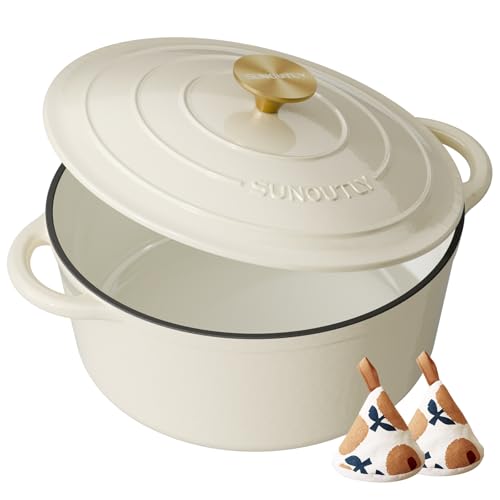
Enameled Cast Iron Dutch Oven, 6QT Pot with Lid, Cream White
6 qt$49.98 Check pricePrices change often - Lodge
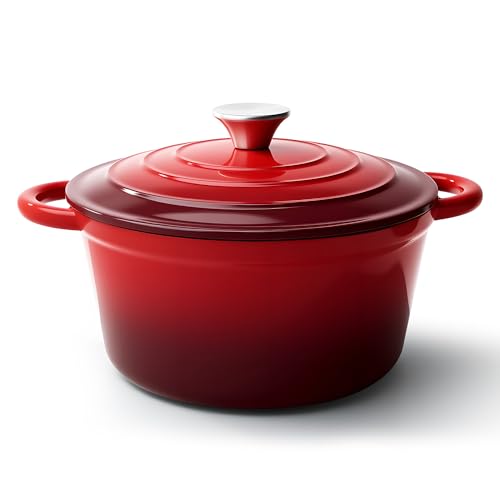
Lodge Essential Enamel Cast Iron Dutch Oven, 6 Quart, Island Spice Red
6 qt$72.99 Check pricePrices change often - Le Creuset
Le Creuset Enameled Cast Iron Signature Deep Round Oven, 6.5 qt., Sea Salt
6.5 qt$289.95 Check pricePrices change often - Le Creuset
Le Creuset Enameled Cast Iron Round Dutch Oven, 5.5 qt., Cerise
5.5 qt$289.99 Check pricePrices change often - Le Creuset
Le Creuset Enameled Cast Iron Round Dutch Oven, 7.25 qt., Cerise
7.25 qt$325.99 Check pricePrices change often


Common questions
Will my plain stainless steel dutch oven work on an induction hob?
Only if it has a magnetic base. It depends on the grade. Ferritic stainless such as 430 is magnetic and works; austenitic 18/10, which is grade 304, is not magnetic and does not. Test it with a fridge magnet rather than guessing from the material.
Why does some stainless steel work and some not?
Stainless comes in different crystal structures. Austenitic grades such as 18/10, which is grade 304, contain enough nickel to be non-magnetic and induction cannot couple to them. Ferritic grades such as 430 are magnetic and work. Cookware makers use both deliberately: an 18/10 cooking surface inside for inertness, and a 430 layer outside so the hob can grip it.
Does an induction interface disc solve it?
It makes the pan hot, and it throws away most of the point. The disc heats and then conducts heat into the pan, which reintroduces exactly the lag and uneven heating that induction removes. It is a reasonable stopgap for one pan you cannot replace and a poor basis for equipping a kitchen.
Why will my hob not detect a small pan?
Most domestic rings need roughly a 4.3 inch magnetic base before the detection circuit responds. Below that the hob assumes nothing is there and will not switch on. Small saucepans, milk pans and egg pans are the usual casualties, and some hobs include one smaller ring specifically to handle them.
Is a warped base a problem on induction?
Yes, more than on gas or electric. Induction needs the magnetic metal close to the glass, so a base that rocks or bows away heats unevenly and can make the hob cycle oddly. Warping is almost always caused by thermal shock, meaning a hot pan meeting cold water, and it is permanent once it happens.