Best cast iron skillets
Quick answer
The Lodge Pre-Seasoned Cast Iron Skillet, 10.25 Inches ($24.90), is the best cast iron skillet for most kitchens: it comes pre-seasoned out of the box, uses a PFAS-free seasoning process, and its 10.25 inch rim diameter leaves roughly an 8 inch flat cooking surface, the most useful size for searing a single protein or two eggs.

Lodge Pre-Seasoned Cast Iron Skillet, PFAS-Free, 10.25 Inches
10.25 inThis Lodge skillet arrives pre-seasoned, so it is usable straight out of the box rather than requiring an initial multi-round seasoning session. Cast iron conducts heat relatively poorly, around 52 W/m-K compared to aluminum's roughly 237 W/m-K, but it has high heat capacity, which is exactly what lets it hold a stable, intense surface temperature through a sear even after cold food is added. At 10.25 inches, the flat cooking surface is roughly 8 inches, the most versatile size for one to two servings.
The three tiers
Beginner: Best first skillet
someone who has never owned cast iron and wants the lowest-risk entry point- Beginner pick
Lodge Pre-Seasoned Cast Iron Skillet, PFAS-Free, 10.25 Inches
10.25 in$24.90 Check pricePrices change often
At $24.90, this Lodge 10.25 inch skillet arrives pre-seasoned and ready to cook with immediately, which removes the biggest barrier for a first-time cast iron owner: the initial seasoning process. Lodge uses a PFAS-free seasoning oil, and the 10.25 inch rim diameter gives an approximately 8 inch cooking surface, large enough for a single steak, a few eggs, or a small batch of cornbread without being too heavy or unwieldy for someone still building the habit of drying and re-oiling cast iron after each wash.
Not for: Anyone who wants a lighter pan to lift one-handed. Cast iron is inherently heavy for its size because of the density of the metal, and a new owner who finds a 10.25 inch skillet uncomfortable to maneuver should look at carbon steel instead, which delivers similar high-heat performance at roughly half the weight.
Intermediate: Best value
a cook who wants an alternative seasoning process and manufacturing origin from the dominant Lodge brand
The Victoria 10-Inch Cast Iron Skillet at $28.99 is pre-seasoned with flaxseed oil rather than the vegetable oil blend Lodge typically uses, and it is manufactured in Colombia with a design that traces back to a manufacturer with over a century of cast iron production. Flaxseed oil seasoning is reported by many owners to build a smoother, more slippery seasoning layer over time than some vegetable oil seasonings, though both perform similarly once well used.
Not for: A buyer who wants to standardize on a single widely available brand for replacement parts, matching lids, and easy comparison shopping. Lodge's market dominance in the US means it is easier to find compatible lids and companion pieces than for smaller import brands.
Expert: Performance ceiling
a cook who wants a complete range of sizes to match different dishes rather than compromising on one skillet- Expert pick
Lodge Pre-Seasoned Cast Iron Skillet Set, 8, 10.25 and 12 Inches
12 in$64.90 Check pricePrices change often

The Lodge Pre-Seasoned Cast Iron Skillet Set, covering 8, 10.25 and 12 inch skillets, costs $64.90 for all three sizes, which is close to what a single 12 inch premium skillet costs alone. Owning three sizes means matching the pan to the dish: the 8 inch for a couple of eggs or a small sauce, the 10.25 inch for a single protein, and the 12 inch, with its roughly 10 inch cooking surface, for searing multiple portions or baking a full cornbread.
Not for: Someone with limited storage space or a smaller stovetop, since three cast iron skillets together weigh considerably more than one and take up meaningfully more cabinet space than a nested nonstick or stainless set.
| Product | Price | Diameter | Seasoning |
|---|---|---|---|
| Lodge Cast Iron, 8-Inch | $17.90 | 8 inches | Pre-seasoned |
| Lodge Pre-Seasoned Skillet, 10.25 Inches | $24.90 | 10.25 inches | Pre-seasoned, PFAS-free |
| Victoria 10-Inch Skillet | $28.99 | 10 inches | Pre-seasoned with flaxseed oil |
| Lodge Pre-Seasoned Skillet Set, 8/10.25/12 Inches | $64.90 | 8, 10.25 and 12 inches | Pre-seasoned, PFAS-free |
Why do cooks still choose cast iron when it heats up slowly?
The slow heat-up is a direct tradeoff for cast iron's defining strength: high heat capacity. Once a cast iron skillet reaches temperature, it resists dropping that temperature when cold food, like a steak straight from the refrigerator, is placed in it. That stability is what produces a deep, even sear across the entire piece of food, rather than the food cooling the pan's surface faster than the burner can reheat it.
Aluminum and copper heat up and cool down far faster, which makes them better suited to techniques that require quick temperature adjustments, like a delicate sauce. Cast iron is the better tool specifically for high, sustained, even heat, which is why it remains the standard recommendation for searing steaks, blackening fish, and baking cornbread with a crisp crust.
How do you season a cast iron skillet from scratch?
Seasoning cast iron means baking a thin layer of oil onto the metal surface until it polymerizes into a hard, slightly glossy coating that fills the microscopic pores of the iron and creates a naturally nonstick surface over time. This is done by coating the skillet lightly with a high smoke point oil, wiping off any excess so no visible pooling remains, and baking it upside down in an oven at a moderate temperature for around an hour, then letting it cool inside the oven.
Even a pre-seasoned skillet benefits from repeating this process periodically, and every time food with fat is cooked in the pan and the pan is properly dried afterward, the seasoning layer builds a little further, which is why cast iron skillets that have been used for years by their owners typically outperform brand-new ones for nonstick behavior.
Is Lodge better than other cast iron brands?
Lodge dominates the US cast iron market and offers the widest range of sizes, accessories and pre-seasoned options at competitive prices, which makes it the default recommendation for most buyers. Alternative brands like Victoria, manufactured in Colombia, use different seasoning oils, such as flaxseed, and different manufacturing processes, and owner reports generally describe comparable long-term performance once a skillet from either brand is well seasoned through use.
Can cast iron go on an induction cooktop?
Yes. Cast iron is naturally magnetic, which is exactly what induction cooktops require to generate heat, so no compatibility check is needed the way it sometimes is for aluminum or copper cookware. This is one of the reasons cast iron remains a popular choice even in kitchens that have moved away from gas or traditional electric coil ranges.
One practical note for induction specifically: cast iron's rough, sometimes slightly uneven base can make more contact noise on a glass induction surface than a perfectly flat stainless base, and a thin silicone or felt pad designed for cast iron on glass cooktops can reduce both noise and the risk of surface scratches during regular use.
- Cast iron: naturally induction compatible
- Carbon steel: also naturally induction compatible
- Pure aluminum or copper without a steel layer: not induction compatible
What is the most common mistake new cast iron owners make?
Washing a cast iron skillet with soap and a scouring pad and then letting it air dry is the most commonly cited mistake in owner reports, because leftover moisture on unprotected iron leads to rust, and repeated scrubbing removes the seasoning layer built up from previous cooking. The standard care routine is a quick wash with hot water and minimal soap, immediate thorough drying, often by placing the pan briefly on a warm burner, followed by a very light coat of oil before storage.
Is enameled cast iron different from bare cast iron?
Enameled cast iron, coated in a glass-like finish, does not require seasoning at all and resists rust indefinitely, but it also cannot build the same natural nonstick seasoning layer that bare cast iron develops through use, and it is generally not recommended for the highest-heat searing techniques bare cast iron handles well. The skillets covered on this page are all bare, unfinished cast iron, which is the traditional choice for searing and the type that requires the seasoning routine described above.
How we chose
This page is researched from published manufacturer specifications, including rim diameter, seasoning method and country of manufacture, cross-checked against owner reports on seasoning behavior and long-term durability. No in-person cooking or lab testing of these skillets was performed.
We weighted pre-seasoned status heavily for beginner and intermediate picks, since arriving pre-seasoned removes the most intimidating step for a first-time cast iron owner. We also treated rim diameter and the resulting flat cooking surface as a primary spec, since a skillet's usable size is meaningfully smaller than its advertised diameter.
Buying tips
What size cast iron skillet do you actually need?
A skillet is sold and labeled by its rim diameter, but the flat cooking surface, the part that actually touches food, is typically about 2 inches smaller because of the sloped sidewalls. A 10.25 inch skillet has roughly an 8 inch cooking surface, enough for one to two servings, while a 12 inch skillet has roughly a 10 inch surface, better for searing multiple portions or larger cuts of meat at once. An 8 inch skillet, with roughly a 6 inch surface, is best reserved for single servings, small sauces, or toasting spices rather than a main cooking vessel.
Does pre-seasoned mean it never needs seasoning again?
No. Pre-seasoned means the skillet arrives with an initial layer of polymerized oil baked onto the surface, so it is usable immediately, but that seasoning layer builds and improves with every use where fat is added and the pan is properly dried and lightly oiled afterward. Seasoning is an ongoing, cumulative process, not a one-time treatment, regardless of what condition the skillet arrives in, and a skillet used weekly for a year will typically release food more cleanly than the same skillet used only a handful of times.
Why does cast iron take longer to heat up than aluminum?
Cast iron conducts heat poorly compared to other cookware metals, roughly 52 W/m-K versus about 237 W/m-K for aluminum, which is why a cast iron skillet needs several minutes on the burner before it reaches an even, stable temperature. That slow heat-up is paired with high heat capacity, meaning once hot, cast iron holds that heat and does not drop in temperature quickly when cold food is added, which is exactly the trait that produces a strong, consistent sear.
Is glass-top or electric coil range compatibility different for cast iron?
Cast iron works on gas, electric coil, glass-top electric and induction ranges without any compatibility concern, since it is naturally magnetic and simply solid metal with no coating to protect. The one caution on glass-top electric ranges is to avoid sliding a heavy cast iron skillet across the surface, since the rough underside of some cast iron pans can scratch a glass cooktop over repeated use, so lifting rather than sliding is the safer habit.
Is a heavier cast iron skillet always better?
Not necessarily. Weight in cast iron mainly reflects the manufacturing process and wall thickness rather than cooking performance, and a heavier skillet is simply harder to maneuver, especially one-handed for tasks like tossing or flipping. Buyers who value maneuverability over raw heat retention, or who have wrist or grip limitations, should weigh a skillet's listed weight as seriously as its diameter before buying.
Does a helper handle matter on a cast iron skillet?
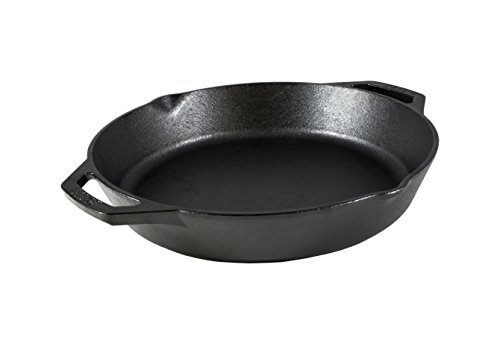
Yes, especially on 10.25 inch and larger sizes. A helper handle, the small secondary handle opposite the main handle, makes it far easier and safer to lift a heavy, hot skillet with both hands, particularly when moving it in and out of the oven. Several Lodge skillets, including the dual handle model, include this feature specifically to address the weight and balance challenges that come with cast iron's density.
Other options worth knowing about
- Lodge
Lodge Pre-Seasoned Cast Iron Dual Handle Pan, PFAS-Free, 10.25 Inches
10.25 in$24.42 Check pricePrices change often - Lodge
Lodge Pre-Seasoned Cast Iron Skillet with Hot Handle Holder, 10.25 Inches
10.25 in$24.99 Check pricePrices change often - Utopia Kitchen
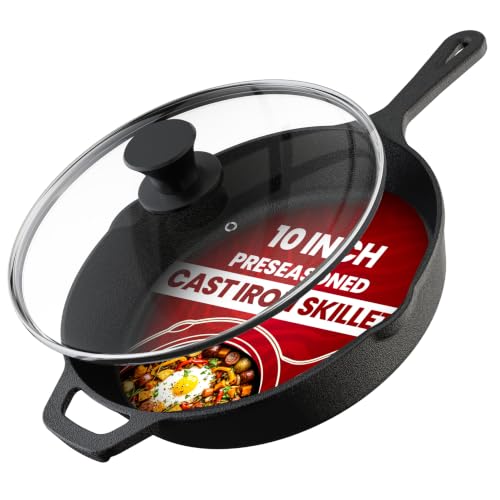
Utopia Kitchen Cast Iron Skillet 10 Inch with Lid Chefs Frying Pan Black
10 in$25.99 Check pricePrices change often - Lodge
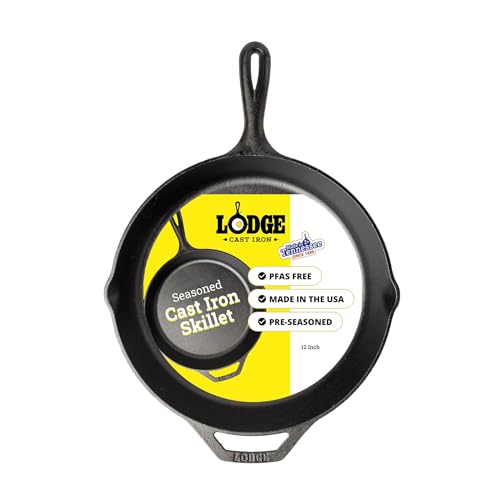
Lodge Pre-Seasoned Cast Iron Skillet, PFAS-Free, 12 Inches
12 in$29.90 Check pricePrices change often


Safety
Common questions
What is the best cast iron skillet for a beginner?
The Lodge Pre-Seasoned Cast Iron Skillet, 10.25 Inches, at $24.90, is the best beginner pick. It arrives pre-seasoned and ready to use, uses a PFAS-free seasoning process, and its 10.25 inch size gives roughly an 8 inch cooking surface, versatile enough for most single-serving cooking tasks.
What size cast iron skillet should I buy first?
A 10 to 10.25 inch skillet is the most commonly recommended first size, since it handles one to two servings comfortably without the extra weight and storage demands of a 12 inch skillet. Buyers who regularly cook for a family of four or more should consider sizing up to 12 inches or buying a multi-size set.
Does cast iron really need to be re-seasoned after every wash?
Not after every single wash, but a light coat of oil after drying is good practice, especially in the first several months of ownership while the seasoning layer is still building. A well-seasoned cast iron skillet that has years of cooking behind it needs less frequent re-oiling than a brand-new one.
Can you cook acidic food like tomato sauce in cast iron?
A well-seasoned cast iron skillet can handle occasional acidic cooking, like deglazing with wine or a quick tomato sauce, without issue. Prolonged simmering of highly acidic foods, however, can gradually strip the seasoning layer over repeated use, so owners generally reserve a dedicated stainless or enameled pot for long-simmered acidic dishes.
Why is my new cast iron skillet sticky right out of the box?
A tacky or sticky surface on a new pre-seasoned skillet usually means the seasoning oil was applied too thickly and did not fully polymerize during manufacturing. Running the skillet through one more seasoning cycle at home, a thin oil coat baked upside down in the oven, typically resolves this and improves the surface for future cooking.
Is a heavier cast iron skillet always higher quality?
No. Weight mainly reflects wall thickness and manufacturing process rather than a direct quality signal, and a heavier skillet is simply harder to maneuver. Both lighter and heavier cast iron skillets can hold a proper seasoning layer and perform a strong sear equally well once broken in.