PTFE vs Ceramic Nonstick
Quick answer
Buy the T-Fal Ultimate Hard Anodized Nonstick Fry Pan ($54.99) for longer-lasting release and a higher published temperature limit; buy the SENSARTE 10-Inch Ceramic Frying Pan ($35.99) if avoiding PTFE entirely matters more than how long the nonstick release lasts.

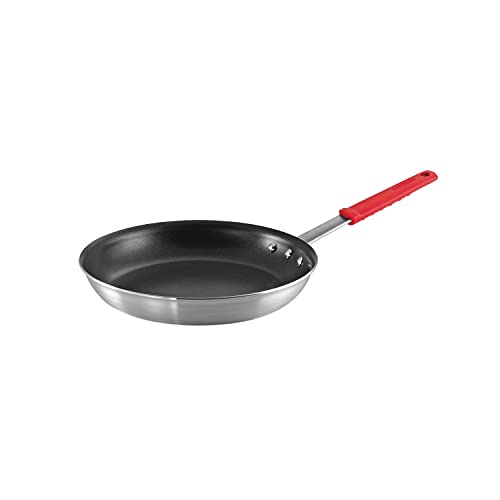
T-Fal Ultimate Hard Anodized Nonstick Fry Pan With Lid 12 Inch, Oven Broiler Safe 400F, Lid Safe 350F, Cookware, Pots and Pans, Kitchen Frying Pans, Skillets, Home, Dishwasher Safe, Onyx
12 inCooks who want the longest-lasting nonstick release and a slightly higher rated cooking and oven temperature, and are not concerned about PTFE itself.
| PTFE | Ceramic (sol-gel) | |
|---|---|---|
| Contains PTFE | Yes | No |
| Published temperature range | 400F to 500F | 350F to 450F |
| Release durability over time | Longer-lasting | Fades sooner, generally |
| Breaks down near | 500F | 450F |
| Pet bird safety at overheat | Fumes rapidly fatal to birds if overheated | Marketed as free of the specific PTFE risk |
| Metal utensil safe | No | No |
| Price | $54.99 | $35.99 |
Two different chemistries, one shared goal
PTFE, commonly known by the brand name Teflon, is a synthetic fluoropolymer that creates an extremely low-friction surface, which is what makes eggs slide out of a nonstick pan with barely a drop of oil. It has been the dominant nonstick coating for decades because of how reliably it releases food and how long that release lasts with normal care. Its chemical structure is also highly stable at typical cooking temperatures, which is part of why it earned such widespread adoption in cookware long before ceramic alternatives became common on store shelves.
Ceramic nonstick, despite the name, is not actual fired ceramic. It is a sol-gel coating, typically derived from silica, applied and cured onto the pan's surface to create a different kind of low-friction layer. Its main selling point is not superior performance, it is that it contains no PTFE at all, which appeals to cooks who want to avoid that specific compound regardless of how it performs in daily use.
Both coatings are typically applied over a metal base, most often aluminum or hard-anodized aluminum, in one or more sprayed layers that are then cured under heat to bond to the metal. The number and thickness of those layers varies by manufacturer and price point, which is part of why nonstick performance differs even between two pans using the same basic coating chemistry.
Temperature limits: both are lower than stainless or cast iron
PTFE coatings are commonly published in the 400F to 500F range, with the coating beginning to break down as it approaches 500F. That is the reasoning behind published oven-safe ratings like the T-Fal Ultimate's 400F pan rating and roughly 350F lid rating, both set with a safety margin below where the coating actually starts to degrade.
Ceramic nonstick coatings are typically published lower, in the 350F to 450F range, meaning ceramic pans generally have a slightly lower usable temperature ceiling than PTFE pans of similar quality. Both coatings are meaningfully lower than bare stainless or cast iron, which can often handle 500F or more without any coating to protect. This is one more reason a kitchen benefits from owning at least one uncoated pan alongside its nonstick cookware, for tasks that call for higher sustained heat than either coating is rated to handle.
Why overheating PTFE specifically matters for pet birds
When PTFE cookware is heated well past its rated temperature, typically from an empty pan left on high heat, it releases fumes that are rapidly fatal to pet birds, a well-documented risk specific to overheated PTFE. This is not a risk at normal cooking temperatures with food or oil in the pan; it happens specifically when a pan is overheated empty or dry, which is avoidable with basic attentiveness on any stovetop.
Anyone with pet birds in the home should be especially careful never to leave a PTFE pan heating unattended and empty, and should keep birds in a separate, well-ventilated room from the kitchen as a general precaution regardless of which nonstick coating is in use. Ceramic sol-gel coatings do not carry this same specific, well-documented bird-fume risk since they contain no PTFE, which is one of the clearest safety-driven reasons some households choose ceramic over PTFE despite its shorter typical lifespan. A working kitchen exhaust fan run during and after cooking is a reasonable general precaution for any household, bird owners included.
Which coating releases food better, and for how long
PTFE generally holds its nonstick release longer over months of regular use than ceramic sol-gel coatings, which tend to lose their slick surface noticeably faster, sometimes within the first year of frequent cooking. This is one of the most consistent complaints about ceramic nonstick pans: the coating looks and feels similar to PTFE when new, but loses effective release sooner, requiring more oil and more careful heat management as it ages. This is a known limitation of the sol-gel chemistry itself, not a manufacturing defect specific to the SENSARTE pan referenced here.
Neither PTFE nor ceramic nonstick lasts indefinitely. Both wear down with metal utensils, high heat, and abrasive cleaning, and both eventually reach a point where food starts sticking even with adequate oil and the correct heat level. Budgeting for periodic nonstick pan replacement, roughly every one to three years for PTFE and often sooner for ceramic, is a realistic part of owning either type.
Price and how the pan's base material factors in
The T-Fal Ultimate Hard Anodized PTFE fry pan costs $54.99 and is built on a hard-anodized aluminum base, a durable body material separate from the coating itself that helps the pan resist warping over years of use. The SENSARTE ceramic pan costs $35.99 and is built on a lighter standard aluminum base, which heats up quickly but can be more prone to warping over years of high-heat use compared to hard-anodized construction.
This base material difference compounds the coating difference already described: a hard-anodized PTFE pan combines two more durable components, while a standard aluminum ceramic pan combines two components generally expected to have a shorter usable life, which is part of why the price gap between these two pans reflects more than the coating alone.
Buyers who want ceramic's PTFE-free coating without accepting a lighter aluminum base can look for ceramic-coated pans built on a hard-anodized or stainless base instead, which typically cost more than the SENSARTE pan referenced here but combine the safety-driven coating choice with a more durable body material.
Recognizing wear, cost per year, and habits that extend either coating's life
The clearest sign a nonstick pan, PTFE or ceramic, needs replacing is food sticking noticeably even with adequate oil and correct heat, along with visible scratches, dark discoloration, or flaking on the cooking surface. Comparing these two pans purely on the shelf price misses the more useful comparison: a $54.99 PTFE pan that holds strong release for three years works out to roughly $18 per year, while a $35.99 ceramic pan holding strong release for closer to one year can work out to a similar or higher annual cost despite the lower upfront price.
Simple habits stretch the useful life of both coatings meaningfully: preheating on medium rather than high heat, adding a small amount of oil even on a nonstick surface, using wood or silicone tools instead of metal, and hand washing with a soft sponge instead of the dishwasher. None of these habits close the gap between the two chemistries entirely, but they help either pan reach the upper end of its expected lifespan.
Which coating to actually buy
If PTFE itself is not a concern and the priority is nonstick performance that lasts as long as possible, the T-Fal Ultimate Hard Anodized Nonstick Fry Pan is the stronger buy at $54.99. If avoiding PTFE specifically is important, the SENSARTE Ceramic Frying Pan at $35.99 delivers that with the understanding that release will likely fade sooner and cooking should generally stay at lower to medium heat to get the most life out of it.
Ceramic (SENSARTE)

SENSARTE 10Inch Nonstick Ceramic Frying Pan with Lid, PFAS/PTFE/PFOA Free
10 inCooks who specifically want to avoid PTFE, are cooking at lower to medium heat, and accept that release typically fades sooner than PTFE.
Both sides of this comparison
- Blue Diamond
Blue Diamond 10" Diamond Infused Ceramic Nonstick Frying Pan Skillet, Blue
10 in$19.92 Check pricePrices change often - CAROTE
CAROTE 10 inch Non Stick Black Frying Pan Skillet, PFOA-Free
10 in$22.99 Check pricePrices change often - Pyrex
Pyrex 10-Inch Fry Pan Ceramic Cookware with Stainless Steel Handles
10 in$24.99 Check pricePrices change often - Tramontina
Tramontina Professional 12-Inch Non Stick Large Frying Pan
12 in$28.99 Check pricePrices change often


Common questions
Is ceramic nonstick safer than PTFE?
Ceramic sol-gel coatings contain no PTFE, which is the main safety distinction cooks look for. At normal cooking temperatures with food or oil in the pan, both coatings are considered safe for general home use; the specific, well-documented risk with PTFE is fumes released when a pan is overheated empty, which is rapidly fatal to pet birds.
Which lasts longer, PTFE or ceramic nonstick?
PTFE generally holds effective nonstick release longer than ceramic sol-gel coatings, which tend to lose their slick surface faster with regular use, sometimes within the first year. Both are consumable coatings that eventually need replacing, but ceramic typically needs replacing sooner under similar use.
What temperature can I safely cook with a PTFE pan?
PTFE cookware is commonly published in the 400F to 500F range, with the coating starting to break down as it nears 500F. Manufacturers build in a safety margin below that, which is why a specific pan might carry a 400F oven rating even though the coating itself does not fail until closer to 500F.
Why is ceramic nonstick rated for a lower temperature than PTFE?
Ceramic sol-gel coatings are generally published in the 350F to 450F range, a bit lower than PTFE's 400F to 500F range, reflecting a lower temperature at which the ceramic coating itself starts to break down. Staying within a pan's published rating, regardless of coating type, is the best way to protect its nonstick surface over time.
Is it dangerous to overheat a nonstick pan around pets?
Yes, specifically for PTFE coatings and specifically for pet birds. Fumes released by severely overheated, empty PTFE cookware are rapidly fatal to birds, which is a well-documented risk. This happens at temperatures well above normal cooking use, typically from an empty pan left on high heat, and is preventable by never leaving nonstick cookware heating unattended.
Can I use metal utensils on ceramic nonstick pans?
No. Both ceramic and PTFE nonstick coatings are vulnerable to scratching from metal utensils, which shortens their effective lifespan regardless of which chemistry is used. Wood, silicone, or plastic utensils are recommended for both coating types.