Oven-safe cookware explained
Quick answer
A pan's oven-safe temperature is set by its lowest-rated component, not its metal body: a pan with an all-metal stainless body can still be limited to 350F or lower if it has a phenolic handle knob, a glass lid, or a nonstick coating rated below the body's own ceiling.
Component temperature ratings are published manufacturer figures for common handle, lid and coating materials.
| Component | Typical oven ceiling | Notes |
|---|---|---|
| Riveted stainless handle | Up to about 600F | All-Clad publishes 600F for stainless-handled lines |
| Silicone handle sleeve | About 400F | Common on mid-range stainless and nonstick sets |
| Phenolic handle | About 350F | Common on affordable cookware sets |
| Wooden handle | Not oven safe | Stovetop use only |
| Glass lid | 350F to 425F | Often the limiting factor on an otherwise high-heat pot |
| Phenolic lid knob | About 375F | Can be lower than the glass lid it sits on |
| Enamel coating | About 500F | Used on enameled cast iron dutch ovens |
| PTFE nonstick | 400F to 500F | Varies by specific product |
| Ceramic nonstick | 350F to 450F | Generally lower than PTFE |
| Pyrex glass bakeware | 425F, no broiler | Broiler heat adds thermal stress plain baking does not |

The rule that decides every oven-safe question
Oven-safe temperature for a piece of cookware is the maximum heat the weakest single part of that pan can tolerate before it degrades, melts, or fails, and every pan has to be judged by that weakest part, not by the metal body alone. A cast iron skillet with a bare metal handle can go in a very hot oven with no issue. The same skillet with a silicone-sleeved handle is limited by that sleeve, usually to around 400F, regardless of how much heat the iron itself could survive.
This is why two pans that look almost identical, same material, same size, can carry two completely different oven ratings. The determining factor is never the pan body by itself. It is always the lowest-rated part attached to it: the handle, the lid, or any coating on the cooking surface.
Handle materials and their limits
Riveted stainless steel handles are the most oven-tolerant handle type and typically carry the highest published ratings among common handle materials, with brands like All-Clad publishing figures around 600F for their stainless-handled lines. A bare metal handle with no separate sleeve or coating essentially shares the oven ceiling of the pan body itself.
Silicone-sleeved handles, common on mid-range cookware for a comfortable, heat-resistant grip on the stovetop, are typically rated lower, around 400F, well below what the metal underneath could take. Phenolic handles, a hard plastic resin used on many affordable cookware sets, are rated lower still, typically around 350F, and are the most common reason an otherwise oven-capable pan gets stopped at a moderate temperature. Wooden handles are not oven safe at any temperature and are meant for stovetop use only; wood in a hot oven can scorch, crack, or in extreme cases ignite.
Lids are usually the actual limiting factor
Lids fail people more often than handles because a lid's knob is frequently made from a different, less heat-tolerant material than the lid itself. Glass lids are typically rated in the range of 350F to 425F, well below what the pot underneath could handle, and phenolic knobs on top of those lids, common even on otherwise all-metal lids, are typically rated around 375F, sometimes lower than the glass surrounding them.
The practical result is that a stockpot or dutch oven with a metal body rated for high heat may still need its glass lid removed before the dish goes into a hot oven, or may need to stay at whatever the lid allows if the recipe calls for covered baking.
Nonstick and enamel coatings set their own ceiling
PTFE nonstick coatings are typically rated in the range of 400F to 500F, and ceramic nonstick coatings are typically rated lower, in the range of 350F to 450F, both well under what the bare metal underneath could survive on its own. Enamel coating, the glossy finish on enameled cast iron dutch ovens, is rated higher, typically around 500F, closer to what bare cast iron itself can handle, which is why enameled dutch ovens are generally more oven-flexible than nonstick cookware of any kind.
Pyrex glass bakeware carries its own well-known limit: typically rated to 425F with no broiler use, since the sudden, intense radiant heat of a broiler element can cause thermal stress that plain oven heat does not.
How to actually check before the oven goes on
The manufacturer's published rating for the specific pan, not the general material, is the only reliable source, since two pans of the same material can carry different ratings depending on handle and lid choices. Check the packaging, the product page, or the base of the pan itself, which is often stamped with an oven-safe temperature directly. When a published number is not available, the safest approach is to treat the pan as limited by whichever component looks least heat-tolerant, phenolic plastic or silicone over bare metal, and to remove any glass lid before high-heat oven use unless it is specifically rated for it.
- Check the pan base or the product listing for a stamped or published oven-safe number
- Identify the handle material separately from the pan body
- Check the lid and its knob separately from the lid itself
- Remove glass lids before high-heat oven use unless rated otherwise
- Never assume a coated pan shares the oven ceiling of the metal underneath
Why this trips people up so often
Most oven-safe confusion comes from assuming the pan is a single material when it is actually an assembly of several materials with different tolerances bolted, riveted or molded together. A recipe that calls for finishing a skillet in a hot oven assumes a bare metal handle; following that instruction with a silicone-handled or phenolic-handled pan can damage the handle even though the pan body itself would have been perfectly fine.
Gear for this job
- Le Creuset
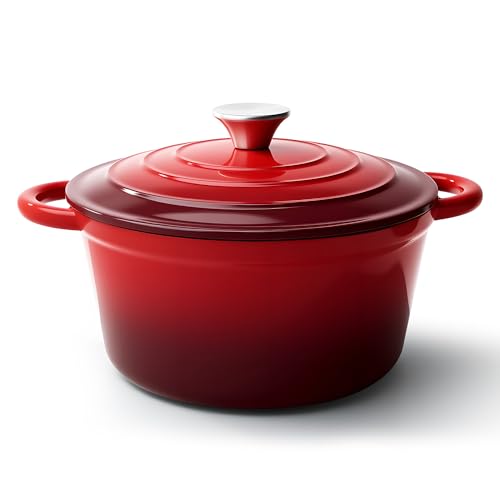
Le Creuset Enameled Cast Iron Signature Deep Round Oven, 6.5 qt., Sea Salt
6.5 qt$289.95 Check pricePrices change often - All-Clad
All-Clad D3 Stainless Steel Cookware Set, 5-Piece, Made in the USA
5 pieces$399.99 Check pricePrices change often - All-Clad
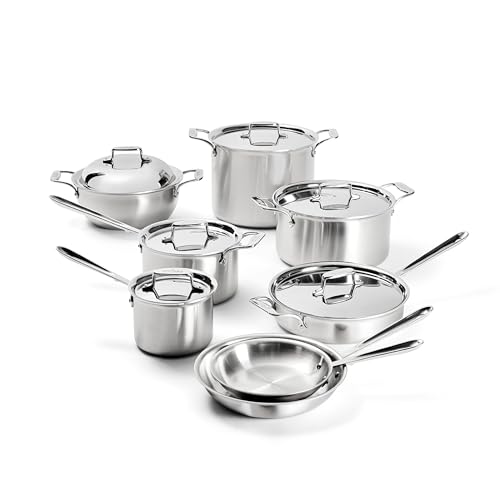
All-Clad D5 Stainless Steel 14-Piece Cooking Set, Made in the USA
14 pieces$1,499.95 Check pricePrices change often



Common questions
What determines a pan's oven-safe temperature?
The lowest-rated component on the pan, not the metal body, determines the true oven ceiling. A stainless or cast iron body can typically handle very high heat, but a silicone handle, a phenolic knob, a glass lid, or a nonstick coating on that same pan will each have their own, usually lower, published limit, and whichever is lowest wins.
Can I put a pan with a glass lid in the oven?
Only up to the glass lid's own rating, typically in the 350F to 425F range, even if the pot underneath could handle much higher heat. Check whether the lid's knob has a separate, sometimes lower, rating around 375F for phenolic knobs. Many cooks remove the lid entirely for high-heat oven finishes rather than risk it.
Are wooden handles ever oven safe?
No. Wooden handles are not rated for oven use at any temperature and are intended for stovetop use only. Oven heat can scorch, dry out, crack or in extreme cases ignite wood, so any pan with a wooden handle should stay out of the oven regardless of what the pan body itself could tolerate.
Is enameled cast iron more oven safe than nonstick cookware?
Generally yes. Enamel coating on cast iron dutch ovens is typically rated around 500F, close to what bare cast iron can handle, while PTFE nonstick tops out around 400F to 500F and ceramic nonstick is usually lower still, around 350F to 450F. Enameled cast iron tends to have more oven headroom than either nonstick coating.
Why does my nonstick pan have a lower oven rating than a bare stainless pan?
The nonstick coating itself, PTFE or ceramic, has its own heat tolerance that is lower than bare metal, typically 400F to 500F for PTFE and 350F to 450F for ceramic. Even though the metal body underneath could survive higher heat, the coating sets the actual usable ceiling for that pan.
Can Pyrex glass go under the broiler?
No. Pyrex glass bakeware is typically rated to 425F for standard oven baking but is not rated for broiler use. The intense, direct radiant heat of a broiler element creates thermal stress that ordinary oven heat does not, which is why broiler use is specifically excluded even within the glass's normal temperature range.