ZDP-189 knife steel
Quick answer
ZDP-189 is a stainless kitchen knife steel running about 64 to 66 HRC. Edge retention is very high, toughness very low, corrosion resistance high and ease of sharpening very low. It is found in Specialist high-hardness knives.
The Rockwell hardness figures are published by the manufacturers. The one to five scores are relative rankings rather than measurements.
| Steel | Hardness | Retention | Toughness | Corrosion | Sharpening |
|---|---|---|---|---|---|
| X50CrMoV15 | 56 to 58 HRC | 3/5 | 5/5 | 5/5 | 5/5 |
| X55CrMo14 | 55 to 56 HRC | 2/5 | 5/5 | 5/5 | 5/5 |
| 1.4116 | 55 to 56 HRC | 2/5 | 5/5 | 5/5 | 5/5 |
| 440C | 58 to 60 HRC | 3/5 | 3/5 | 5/5 | 4/5 |
| AUS-8 | 57 to 58 HRC | 3/5 | 4/5 | 4/5 | 5/5 |
| AUS-10 | 58 to 60 HRC | 3/5 | 4/5 | 4/5 | 4/5 |
| VG-10 | 60 to 61 HRC | 4/5 | 3/5 | 5/5 | 3/5 |
| VG-MAX | 60 to 61 HRC | 4/5 | 3/5 | 5/5 | 3/5 |
| Ginsan (Silver 3) | 60 to 61 HRC | 4/5 | 4/5 | 5/5 | 4/5 |
| SG2 / R2 powder steel | 63 to 64 HRC | 5/5 | 2/5 | 5/5 | 2/5 |
| ZDP-189 | 64 to 66 HRC | 5/5 | 1/5 | 4/5 | 1/5 |
| Shirogami 2 (White 2) | 61 to 63 HRC | 4/5 | 3/5 | 1/5 | 5/5 |
| Aogami 2 (Blue 2) | 61 to 63 HRC | 5/5 | 3/5 | 1/5 | 4/5 |
| Sandvik 14C28N | 58 to 60 HRC | 3/5 | 4/5 | 5/5 | 4/5 |

What is ZDP-189?
ZDP-189 is a Japanese kitchen knife steel hardened to roughly 64 to 66 on the Rockwell C scale. About as hard as kitchen steel gets. Extraordinary edge retention, and genuinely brittle. This is a specialist tool for a careful cook, not a first good knife.
Rockwell C hardness is measured by pressing a diamond cone into the steel under a set load and reading how deep it goes. Kitchen knives span roughly 55 to 66 HRC. The figure measures resistance to deformation, which correlates strongly with how long an edge stays aligned, and it says nothing directly about toughness or corrosion resistance.
What the hardness actually buys you
At 64 to 66 HRC this steel supports a very thin, acute edge that stays sharp through a great deal of cutting. That is the central trade in kitchen knives, and it is metallurgy rather than marketing: a harder edge is thinner and more brittle at its apex, so it survives longer in clean cutting and fails by chipping rather than rolling when it meets something hard.
At this hardness the knife will chip rather than roll. No bones, no frozen edges, no twisting in the cut, and no pull-through sharpener, ever. A chip needs far more work to remove than a rolled edge does.
Sharpening and maintenance
Ease of sharpening scores 1 out of 5 here. This steel takes real effort and a proper stone. A pull-through sharpener will damage it rather than restore it.
Corrosion resistance scores 4 out of 5, so ordinary kitchen use presents no problem. Washing and drying by hand is still the rule, and no kitchen knife belongs in a dishwasher regardless of its steel.
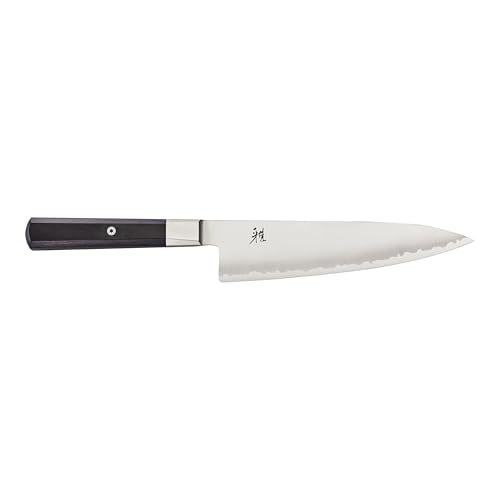
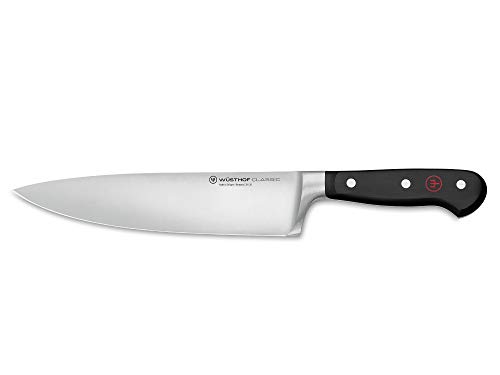
Knives and sharpening gear
- BABOSTOW
BABOSTOW Knife Sharpening Stone 1000/6000 Grit with Base & Angle Guide
$12.14 Check pricePrices change often - King
KING KW65 1000/6000 Grit Combination Whetstone with Plastic Base
$27.97 Check pricePrices change often




Common questions
How hard is ZDP-189?
About 64 to 66 on the Rockwell C scale, as published by the makers who use it. For context, kitchen knives run roughly 55 to 66 HRC overall, so this sits toward the harder end of the range. Hardness is measured by indentation depth under a set load.
Is ZDP-189 a good kitchen knife steel?
It is a good choice for the right cook. About as hard as kitchen steel gets. Extraordinary edge retention, and genuinely brittle. This is a specialist tool for a careful cook, not a first good knife. Whether it suits you depends far more on how you maintain knives than on the alloy itself: it rewards someone who owns a whetstone and will use it.
Does ZDP-189 rust?
It is a stainless steel with a corrosion resistance score of 4 out of 5, so ordinary kitchen use will not rust it. Leaving it wet in a sink for a day or running it through a dishwasher can still pit the surface, which is why every kitchen knife should be washed and dried by hand.
How do I sharpen ZDP-189?
On a whetstone, around 1000 grit to set the edge and 3000 to 6000 to refine it. A pull-through sharpener tears at this hardness rather than abrading cleanly, and it will leave the knife worse than it found it.
Does the steel matter more than the blade shape?
Usually less. How thin the blade is behind the edge, and the angle it is ground to, decide how a knife feels in the cut far more than the alloy does. A well ground knife in ordinary steel outperforms a thick, badly ground knife in premium steel. The steel mainly determines how long that feeling lasts before sharpening.