Best bread knives
Quick answer
The best bread knife for most kitchens is the Mercer Culinary Millennia 10 Inch at $16.15, a serrated, wide wavy-edge knife long enough to clear a full loaf and durable enough for daily use.
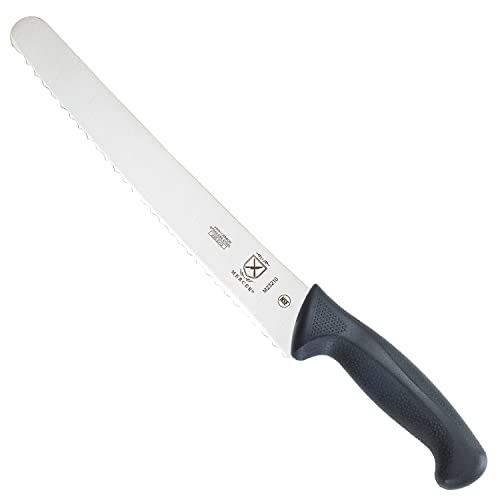
Mercer Culinary M23210 Millennia Black Handle, 10-Inch Wide Wavy Edge, Bread Knife
10 inThe Mercer Culinary Millennia 10 Inch pairs a full 10 inch length, enough to clear a wide sourdough loaf in a single pass, with a wide wavy serrated edge that grips crust without crushing the crumb underneath. At $16.15 it costs less than most kitchen gadgets and does a job no straight-edge chef knife can do as cleanly.
The three tiers
Beginner: Best budget option
someone who does not yet own a dedicated bread knife and slices bread only occasionally
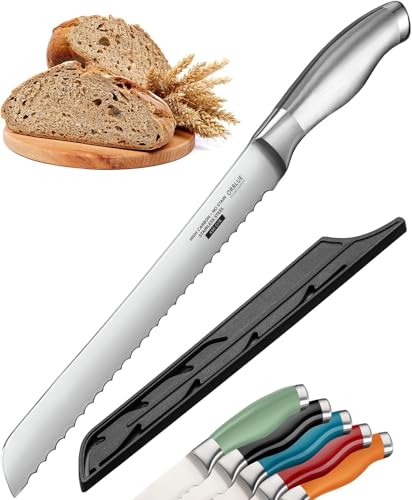
The Orblue Serrated Bread Knife at $12.99 gives you the single feature that matters most in this category, a proper wavy serrated edge, at the lowest price point here. It clears crusty bread and soft sandwich loaves alike without tearing, and because serrated edges are rarely sharpened at home anyway, the lower steel investment in a budget knife matters less here than it would on a chef knife.
Not for: someone who bakes bread frequently enough to want the maximum available blade length or a sheath for storage
Intermediate: Best all-around
a home cook or home baker who wants a full 10 inch length and a knife built for daily use- Intermediate pick
Mercer Culinary M23210 Millennia Black Handle, 10-Inch Wide Wavy Edge, Bread Knife
10 in$16.15 Check pricePrices change often
The Mercer Culinary Millennia 10 Inch brings the same professional-kitchen pedigree found across Mercer's other Genesis and Millennia lines to a specifically bread-focused knife: a full 10 inch wide wavy edge that clears an entire boule or baguette in one smooth stroke, on a comfortable, non-slip handle. At $16.15 it is barely more than the budget option here while adding meaningful length and a more durable serration pattern.
Not for: someone with very limited drawer space who only occasionally slices a small sandwich loaf, for whom a shorter knife may be more convenient
Expert: Best step up
someone who bakes bread regularly and wants a sharper, Japanese-style serrated edge- Expert pick
imarku Bread Knife 10 Inch: Japanese High Carbon Stainless Steel
10 in$29.99 Check pricePrices change often

The imarku Bread Knife 10 Inch at $29.99 is built as a Japanese-style high-carbon stainless steel option, positioned to bite into tough, crackly crust more cleanly than a standard serrated edge. Because the specific steel composition for this line is not confidently confirmed here, treat the recommendation as being about the sharper Japanese-style serration pattern rather than an asserted hardness figure, and expect it to still need the same hand-wash-only care as any other bread knife.
Not for: anyone who slices bread only occasionally and would not notice the difference between this and a standard serrated edge
| Knife | Price | Length | Edge Type |
|---|---|---|---|
| Orblue Serrated Bread Knife | $12.99 | 8 inch | Wavy serrated |
| Mercer Culinary Millennia | $16.15 | 10 inch | Wide wavy serrated |
| imarku Bread Knife | $29.99 | 10 inch | Japanese-style serrated |
What makes a bread knife different from every other knife in the block
Every other knife in a typical block, the chef knife, santoku, and paring knife, uses a straight edge that is meant to be kept keen through regular honing and periodic sharpening. A bread knife breaks that pattern entirely: its serrated, saw-like edge is designed to grip and cut through a tough exterior while barely compressing the soft interior underneath, using a sawing motion rather than a straight downward push.
This is why a bread knife is one of the few categories in a kitchen where steel hardness and Rockwell figures matter far less than they do for a chef knife. Because only the tips of the serrations actually contact and cut the food, and because most home cooks never resharpen a bread knife at all over its useful life, the practical difference between a $13 bread knife and a $30 one comes down to blade length and the specific serration pattern rather than steel chemistry.
How does a serrated edge actually cut without crushing soft bread
The teeth of a serrated blade concentrate cutting force into a series of small points rather than spreading it evenly along a straight edge. Each point of contact requires very little downward pressure to begin cutting, which means the knife can saw through a firm crust while barely compressing the soft, airy crumb beneath it. A straight edge, by contrast, needs enough downward force to cut the crust that it also compresses and can tear the soft interior in the process.
- Wide wavy serration: better for crusty artisan bread and tough exteriors
- Fine, pointed serration: more common on tomato and utility knives, less ideal for a full bread loaf
Why do bread knives almost never get resharpened at home
Sharpening a serrated edge correctly requires working a rounded or tapered sharpening tool into each individual scallop of the serration, which is a slow, fiddly process most home cooks are not equipped for and most whetstones cannot do at all. Because a bread knife's cutting points are small and distributed, a serrated edge also simply lasts far longer in years of normal use than a straight edge doing the same volume of cutting, which is why most people never sharpen one at all before eventually replacing it.
Does blade length matter as much for bread knives as for chef knives
In some ways it matters more, because a bread knife's main job, clearing a full loaf in one continuous sawing motion, is directly limited by how much blade is available. A 10 inch blade clears a wide sourdough boule or a full baguette without needing to reposition partway through, while an 8 inch blade may require a second cut on wider loaves. If your kitchen regularly handles large artisan loaves, prioritize the full 10 inch length.
For smaller sandwich loaves or pre-sliced bread duty, an 8 inch bread knife like the Orblue is not a real limitation, since the loaf itself rarely exceeds the blade length. Match the blade length to the widest loaf you regularly cut rather than defaulting to the longest option available if drawer space or cost is a real constraint.
How should I store and care for a bread knife
Hand wash and dry it immediately after each use, the same as any other knife, even though the serrated edge is more forgiving of neglect than a straight edge. Store it in a knife block, on a magnetic strip, or with a sheath so the serrations are not knocking against other utensils in a drawer, which can dull the fine points of the serration pattern over time even though the edge as a whole lasts a long time.
Do I actually need a dedicated bread knife if I bake bread only occasionally
If bread appears in your kitchen only a few times a month, even a budget option like the Orblue Serrated Bread Knife at $12.99 is worth owning rather than skipping. The alternative, using a straight-edge chef knife on a crusty loaf, tends to tear or crush the crumb and puts more strain on an edge you would rather keep for other tasks. Because a bread knife is inexpensive and essentially maintenance free, it is one of the easiest additions to a small knife collection even for infrequent bakers.
For someone who bakes bread on a regular basis, whether store-bought loaves or homemade sourdough, the case for owning a proper bread knife is even stronger, and a full 10 inch option like the Mercer Culinary Millennia becomes the more sensible choice over a shorter, more limited blade.
How we chose
This guide is researched from published manufacturer specifications and owner reports rather than in-person evaluation. A bread knife's performance is driven almost entirely by its serration pattern and blade length rather than steel hardness, since serrated edges are rarely resharpened at home the way a straight chef knife edge is, so this guide weighs those two factors most heavily.
Every price quoted matches the exact listing referenced, and where a specific steel type is not confidently confirmed for a listing, this guide describes the knife's design category, such as a wavy serrated edge or a Japanese-style grind, rather than asserting a hardness number that cannot be verified.
Buying tips
Why can't I just use my chef knife on bread
A straight edge, no matter how sharp, tends to crush a soft crumb or tear a crusty exterior because it pushes down through the loaf rather than sawing across it. A serrated edge's teeth grip the crust and saw through it with a back-and-forth motion, applying far less downward pressure on the soft interior. This is the one knife category in a kitchen where a specialized shape genuinely cannot be substituted with a general-purpose chef knife.
Do bread knives ever need sharpening
Rarely, and almost never at home. Serrated edges lose their edge much more slowly than straight edges because only the tips of the serrations do the cutting work, and sharpening a serrated edge properly requires specialized tools most home cooks do not own. When a serrated bread knife finally does dull after years of use, most people are better off replacing an inexpensive one than trying to resharpen it, which is another reason a lower-cost option like the Orblue makes practical sense for this category.
What length bread knife should I buy
A full 10 inch blade, like the Mercer Culinary Millennia or the imarku option here, is the safer default because it clears a wide sourdough boule or a French loaf in a single pass. A shorter blade around 8 inches can still work fine for sandwich bread or smaller loaves, but it will require a second pass, and more sawing motions, on anything wider.
Is a wavy edge better than a straight serrated edge for bread
For bread specifically, yes. A wide wavy edge, as opposed to a fine, pointed serration, is generally considered better suited to crusty artisan bread because the broader teeth grip a tough crust effectively while still gliding cleanly through a soft crumb. A finer serration pattern is more associated with slicing tasks like tomatoes, where a bread knife's wavy edge would be less precise. Look at the serration pattern in a product photo before buying if this distinction matters to how you plan to use the knife.
Other options worth knowing about
- NULAS
NULAS 10-Inch Serrated Bread Knife with Sheath for Sourdough, German Steel
10 in$14.99 Check pricePrices change often

Common questions
What is the best bread knife for most kitchens
The Mercer Culinary Millennia 10 Inch at $16.15. Its full 10 inch length clears wide artisan loaves in one pass, and its wide wavy serrated edge grips crust without crushing the soft crumb underneath, all at a very low price for a knife you will use for years.
Do I need to sharpen my bread knife regularly
No, and in most cases you never will. Serrated edges lose sharpness much more slowly than straight edges because only the tips of the serrations do the cutting, and properly sharpening a serrated edge requires specialized tools most home cooks do not own. Most bread knives are eventually replaced rather than resharpened.
Can I use a bread knife for anything besides bread
Yes, a bread knife's serrated edge also works well on other foods with a firm exterior and soft interior, such as tomatoes, citrus fruit, and some cakes. It is a genuinely useful second knife beyond just slicing loaves.
What length bread knife should I buy for a standard sourdough loaf
A full 10 inch blade, like the Mercer Culinary Millennia or the imarku Bread Knife in this guide, is the safer choice for a wide sourdough boule or a French loaf, since it can clear the full width in one continuous sawing motion.
Is a wavy serrated edge better than a straight serrated edge
For bread specifically, a wide wavy edge is generally preferred because the broader teeth grip a tough crust while still gliding cleanly through a soft crumb. Finer, more pointed serration patterns are more associated with slicing tasks like tomatoes.
Can a bread knife go in the dishwasher
No. Even though serrated edges hold up longer than straight edges, no kitchen knife belongs in a dishwasher. The heat and jostling can still damage the handle and dull the fine serration points over time. Hand wash and dry it immediately after use instead.